 “Mancuso (The Revolutionary Genius of Plants), a plant neurobiologist and professor at the University of Florence, pays homage to the “legendary conquests” of plants in this elegant and charmingly illustrated survey…The topics of human intervention and plant evolution are gracefully intertwined in discussions of coconut trees, date palms, and bristlecone pines, including one 4850-year-old Californian specimen….naturalists and the culinary-inclined will cherish this collection of botanical vignettes.”
–PUBLISHERS WEEKLY
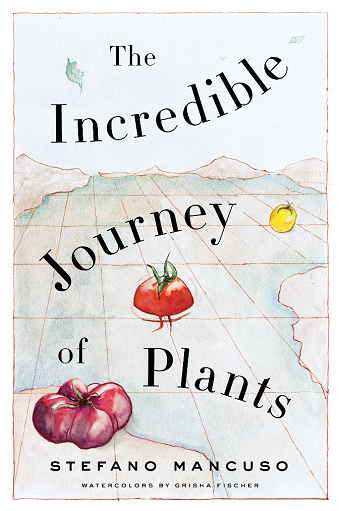
A delightfully wry and absorbing overview, complemented by beautiful illustrations, THE INCREDIBLE JOURNEY OF PLANTS (Other Press Hardcover; March 17, 2020; Translated by Gregory Conti; watercolors by Grisha Fischer; $24.99), by leading plant neurobiologist and author Stefano Mancuso, renders his years of in-depth research in engaging and accessible prose. Exploring some of the critical issues of our time; humanity’s devastating and ongoing impact on the planets and its plants, and the various theories behind exactly which human events were the first catalyst for climate change, Mancuso takes us on an eye-opening tour through a botanical history, from the polar ice caps to desert lands, desolate islands and ground zero of Hiroshima — all places where plants have thrived. He also laments our relentless pursuit of seedless produce, revealing the hidden dangers behind it: When 99% of bananas produced today are genetically identical, the word’s stock can be devastated with one virus. Arriving ahead of Earth Day (April 22), THE INCREDIBLE JOURNEY OF PLANTS is well-suited for Michael Pollan readers and Barbara Kingsolver’s Animal, Vegetable, Mineral.
THE INCREDIBLE JOURNEY OF PLANTS proves that when we’re able to understand plants as a form of life that’s fundamentally different from animals and its own unique life form, a new and fascinating world opens to us. Plants are more sensitive than animals, capable of communicating, and, contrary to popular belief, very social organisms. While they’re not able to change places over the course of their individual lives, they are able to, from generation to generation, conquer the most distant lands, the most impervious areas, and the regions least hospitable to life, with an incredible tenacity and capacity for adaptation. Plants constantly evolve to find innovative ways to spread their seeds, whether by wind or water, on or in animals (and humans), or even exploding seed pods.