Coast Packing Company is celebrating its 100th year in business and remains the leading supplier of animal fat shortenings, such as lard and beef tallow, on the West Coast.
The company has been a significant presence in the restaurant, baking, and food industries for generations. It was founded in 1922 as a livestock and meat packing business and has since become a leader in the food industry.
Coast Packing’s success is the result of four generations of the Rieders and Gustafsons, starting from its founder Anton Rieder to the current CEO Eric R. Gustafson and his late father Ronald R. Gustafson, who passed away in 2021. The company has adjusted its business model over the years but has always remained committed to conducting business with integrity and trust. According to Eric Gustafson, his great grandfather used to say, “sometimes it is better to be lucky than good.” The company’s longevity and achievements are attributed to a combination of patience, persistence, core values of honesty, integrity, respect, treating everyone well, and a little bit of luck.
Coast Packing is actually the last company on the West Coast that continues to thrive as a producer of animal fat shortenings, which are sold both nationally and internationally.
The history of the Rieder/Gustafson families reflects the events of the past century, representing the American dream while also symbolizing significant changes in how we prepare and consume food.
Anton Rieder immigrated from Austria to the United States on February 29, 1908, which happened to be leap day in a leap year. After arriving at Ellis Island, he traveled to Chicago to join his brother Fritz, who worked as a meat cutter in the South Chicago stockyards. Rieder had been a butcher’s apprentice in Austria but understood that his older brothers would manage the family farm.
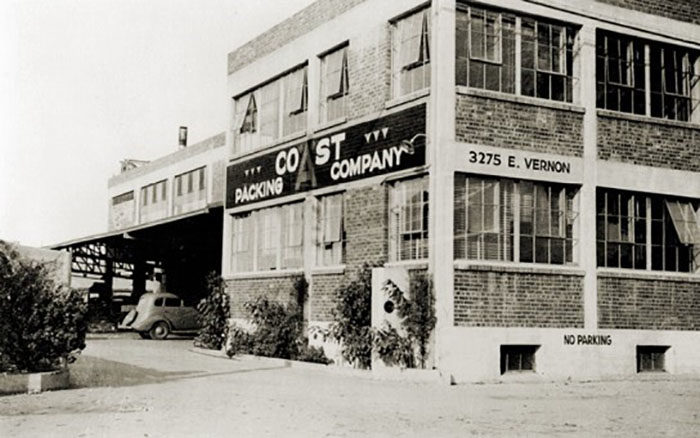
Realizing that he needed to leave the ethnic neighborhood in Chicago to learn English and establish his own path, Rieder answered an ad to work as a farmhand in Oelwein, Iowa. However, to his surprise, everyone there spoke only German. He became friends with Richard “Dick” Oelwein and they decided to work together. In 1915, they moved to Pocatello, Idaho, where the Union Pacific Railroad was constructing a large servicing yard. Sensing potential population growth, they opened their first butcher shop. In 1919, they sold everything and relocated to Los Angeles. In 1922, they formed a partnership and leased a building from a fellow Austrian, which still serves as Coast’s operations center today. When Oelwein unexpectedly passed away in 1934, Rieder purchased his shares from the estate.
As the Depression gave way to the New Deal, the National Industrial Recovery Act fortified the business of agriculture, underwritten by the investment boom that WWII triggered. The federal government approached Rieder to become one of the integral suppliers to feed the military fighting in the Pacific Islands. At the time, Coast, a California state- inspected facility, was given 25 years to meet USDA compliance and help with the war effort. During that crucial period, the federal government took notice of the company. In one unconfirmed story, as Eric was told, the State Department reached out to Rieder, an Austrian, to welcome famed V2 rocket scientist Wernher von Braun to the United States.
In 1935, Rieder, along with his wife Rose, became sole owners of Coast, incorporating in 1937 and managing the business until 1962.
“Anton Rieder enjoyed the challenges of building his many businesses while raising a family,” Gustafson says. “He passed on all of his wisdom to the next generation, especially to my father, who was very close to him as the firstborn grandchild.”